Home › Study Abroad
Students Ethics · Verified July 2026
Who Actually Gets to Study Abroad? Cost, Access and What 'Immersion' Hides
Study abroad is sold as a universal rite of passage and functions as something narrower. What the real barriers are, which of them funding actually removes, and what the word “immersion” tends to hide.
Study abroad marketing loves one word: immersion. You will immerse yourself in the language. Immerse yourself in the culture. Live like a local. It sounds inclusive and authentic, but critical scholars in Education Abroad and the Undergraduate Experience (Brewer and Ogden, 2019) and Transforming Study Abroad (Doerr, 2018) argue that “immersion” is a loaded label.
For students, understanding why matters. It will help you navigate relationships abroad more ethically, learn more deeply, and come home with a more accurate picture of the world than the one painted in brochures.
The Problem With “Immersion”

“Immersion” sounds neutral, but it carries assumptions. It implies that there is a single, authentic host culture waiting to be experienced, and that you—the temporary visitor—can slip into it like stepping into a pool. In reality, host cities contain as many class, ethnic, generational, and political divides as any American city. A semester in Buenos Aires is not an immersion in “Argentine culture.” It is an encounter with particular neighborhoods, institutions, and social networks, mediated by your program’s housing, tuition dollars, and visa status.
The sociologist John Urry’s concept of the “tourist gaze” helps explain the gap. Students arrive with pre-constructed images of the destination—photos from Instagram, descriptions in guidebooks, stereotypes absorbed from popular culture. These images make some sights feel worth seeing and others invisible. The challenge is not to eliminate the tourist gaze—most students cannot—but to become aware of it and gradually replace it with grounded, place-based knowledge.
The Self–Other Binary
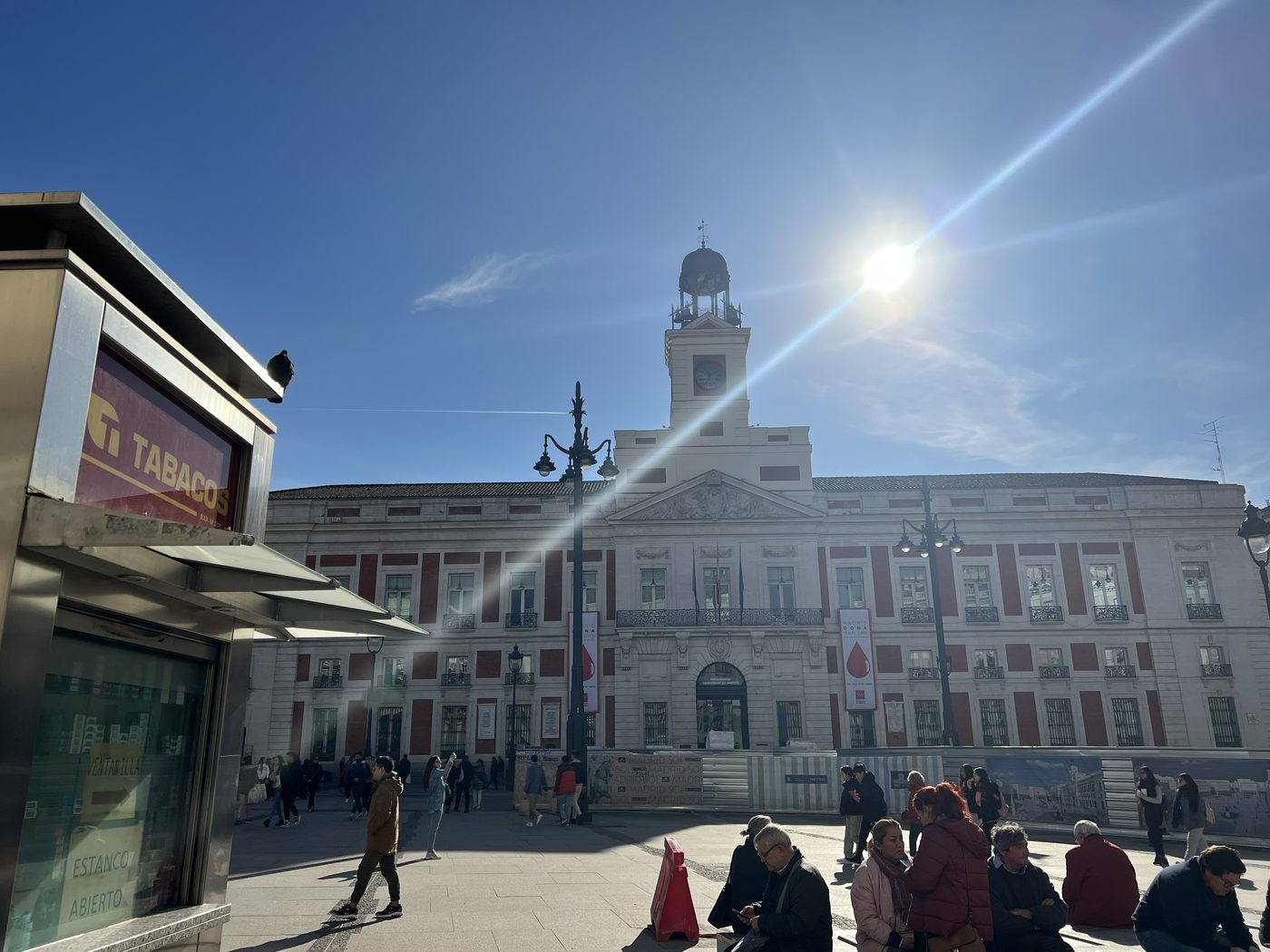
A persistent narrative in study abroad is that the host country is the “Other” to be understood, while the home country is the stable baseline. This framing is increasingly challenged by educators because it flattens both societies.
Students from increasingly diverse backgrounds do not all arrive from the same monolithic “American” perspective. And host communities are not cultural exhibits. One model worth borrowing: globally networked courses that connect cohorts in Dublin, Florence, London, and Sydney to compare how each city is experiencing gentrification, global migration, and housing inequality. Students discovered that “local” problems were often global problems wearing local clothes. That insight replaces exoticism with analytical clarity.
Language and Power
How you describe your experience matters. Posting a photograph of yourself “helping” in a community without context can reinforce stereotypes of Western saviors and passive recipients. Describing a host family member as “poor but happy” reduces a complex life to a tourist’s sentimental shorthand.
The reflection exercises encouraged in critical study abroad programs ask students to interrogate labels:
- When I call something “immersion,” who benefits from that label?
- When I describe a person as “traditional,” what assumptions am I making about modernization and authenticity?
- Who is absent from the story I am telling about this experience?
These questions are not designed to induce guilt. They are designed to improve accuracy.
Toward Ethical Engagement
Ethical engagement does not require perfection. It requires attention and humility. Practical guidelines:
- Ask before photographing people in public or intimate settings; offer to share the image.
- Compensate local collaborators fairly if they contribute labor, translation, or expertise to your project.
- Share credit when presenting joint work; do not position yourself as the sole author of a collaborative effort.
- Listen more than you speak in community settings, especially when you are a temporary visitor.
- Publish thoughtfully. If you write about a community, consider whether publication benefits that community or merely extracts value for your résumé.
One student in a published case study learned this lesson the hard way, complaining to the program director about a project partner and being gently reprimanded for shifting blame instead of building the relationship. The apology that followed was awkward but educational: it showed how textbook knowledge, without relationship or humility, can read as condescension even when unintended.
Real Student Scenario
Maria, a first-generation college student from Queens, chose a homestay in Oaxaca because it felt more authentic than a program dormitory. Three weeks in, Maria realized her host mother worked twelve-hour days selling street food and could not spend much time “immersing” her in local life. Maria felt guilty for imposing and grateful for the labor she had initially romanticized. She reframed the experience: instead of waiting to be taught, she started helping with meal prep and errands before class. The relationship shifted. The learning deepened. Maria now describes that friction as the moment she stopped performing “good student abroad” and started doing the harder work of ethical presence.
First-trip planning answers
Who actually studies abroad?
Participation skews toward students who are not working substantial hours, who are on degree paths with schedule flexibility, and whose families can absorb costs that financial aid does not reach — passports, flights, deposits, visa fees, and the income foregone by not working a term. The barrier is frequently not tuition, which aid often travels with, but the several thousand dollars of adjacent costs nobody advertises.
What are the hidden costs of study abroad?
The ones that break budgets are rarely tuition: passport and visa fees, flights, housing deposits, health insurance the programme does not cover, an unpaid internship placement, weekend travel that becomes socially compulsory, and lost wages from a job you had to leave. Together these routinely add $3,000–6,000 to a nominally affordable programme.
Can low-income students study abroad?
Yes, and the funded routes are specifically designed for it — the Gilman Scholarship exists precisely for Pell Grant recipients, and fully funded programmes like CLS, MEXT and GKS cover essentially everything. What these require is time: they are decided nine to twelve months ahead. The students who miss out most often are not the ones who could not afford it, but the ones who found out about the funding too late. Our scholarships guide and database cover the current cycles.
What does 'immersion' actually mean in practice?
Frequently less than the brochure implies. A large share of programmes place international students together in shared housing, teach in English, and organise a social calendar of other international students. That can be a good experience, but it is not immersion, and describing it as such sets people up to feel they failed at something they were never structurally offered. Direct enrolment, local housing and instruction in the local language are what actually produce it.
Is study abroad worth it if you have to take on debt?
Usually not, on its own. Debt on top of existing student debt for an experience with no certain career return is a poor trade — and the honest version of our is it worth it answer says so. The exception is where the programme is funded, where credits transfer so it costs no more than a home semester, or where the language or placement is directly load-bearing for the career you are actually pursuing.
The Study Abroad Starter Kit
18 pages weighted toward the funded end: how Gilman, CLS, Boren, Erasmus+, MEXT, GKS and DAAD actually select, the 12–18 month timeline that makes them winnable, and fill-in templates for the motivation letters and budgets those applications require.
Get the Starter Kit$15 · instant PDFThe low-cost kit
If cost is the barrier, the honest gear list is short. Buy these; borrow, skip or replace locally for everything else on a typical packing list.
- A universal travel adapter — One purchase that works everywhere, rather than one per country.
- A durable laptop backpack — Replaces a carry-on, a daypack and a weekend bag.
- Packing cubes — Fitting a semester into checked baggage avoids fees that dwarf the cubes.
- A digital luggage scale — Airline excess-baggage charges are the classic avoidable cost.
- A language workbook — The cheapest thing that most improves what you get out of the time.
- A refillable water bottle — Small, but it is a daily cost you control.
Joriu is a member of the Amazon Associates programme. The links above are affiliate links — if you buy through one, we earn a small commission at no extra cost to you. We only list gear we would pack ourselves, and a commission never buys a place on this list.
Joriu has no ads, no paywall and no sponsored placements — the guides are free because a few readers chip in. If this saved you an hour of research, you can buy us a coffee.
Plan the ethics into the itinerary, not just the packing list
The Joriu Study Abroad Starter Kit covers program selection and homestay logistics side by side, so questions about access and equity are part of the planning process from day one.
FAQ
Does studying abroad make me a bad person if I come from privilege? No. It makes you a person with privilege who is studying abroad. The question is what you do with that awareness.
Will talking about this stuff make people think I am complaining? Unlikely. Most educators and employers value nuanced self-awareness over naïve boosterism.
Can working-class students study abroad ethically? Absolutely. Many of the most thoughtful practitioners in the field come from precisely the backgrounds that make them sensitive to power dynamics.
Is all study abroad inherently colonial? That is an overstatement. But uncritical study abroad can reproduce colonial patterns. The goal is awareness, not purity.
How do I apologize if I mess up abroad? Directly, specifically, and without defensiveness. Ask how you can make amends, then follow through.
Understanding privilege in study abroad starts long before departure. Our article on Is Study Abroad Worth It? explains how program choice shapes both financial access and learning depth. And if you are a parent trying to understand these dynamics from the sidelines, see Study Abroad for Parents: Is It Safe, Worth It, and How Much Does It Cost?.
Bottom Line
Study abroad is not inherently corrupt, but it is not naturally liberating either. It is what you make of it. The students who enter with curiosity about global inequality, who reflect critically on their own position, and who act with humility tend to learn more—and do less harm—than those who consume the experience passively. The goal is not to reject study abroad but to take it seriously enough to engage it ethically.
Get the free Move-Abroad Checklist
The full 12-month runway on one printable PDF — plus occasional visa and cost updates.
 Done — download your checklist (PDF).
By subscribing you agree to our privacy policy.
These are frameworks for reflection, not fixed rules — every host community and program is different, and the most useful move is usually to ask local staff or partners directly rather than assume.