Home › Study Abroad
Students Reflection · Verified July 2026
Study Abroad Reflection: 7 Tools That Turn a Semester Into a Story
Most of what you learn abroad evaporates within a month of coming home. These seven tools keep it — and turn a semester into something you can actually describe in an interview, an essay or a grant application.
You have heard that reflection matters. Advisers say it. Orientation leaders say it. The international education research confirms it. But here is what many students do not hear: reflection is not just writing in a journal at the end of the program. The students who extract the most value from study abroad use structured, specific reflection tools throughout the entire experience—before departure, during, and long after they return home.
Research from Education Abroad and the Undergraduate Experience (Brewer and Ogden, 2019) and Assessing Study Abroad (Savicki, Brewer, and Whalen, 2015) shows that systematic reflection produces measurable gains in perspective-taking, cultural self-awareness, and critical thinking. These are not soft outcomes. They are the exact competencies employers consistently rank among the most valuable for new graduates.
I have reviewed dozens of program assessment reports, and the pattern is consistent: students who keep structured notes during the experience perform better in capstones, interviews, and graduate-school applications—not because they are more talented, but because they have evidence.
1. Pre-Departure Reflection Prompts
Before you leave, write down three questions you genuinely want to explore. Examples:
- How do I define “culture,” and how might that definition change abroad?
- What stereotypes do I hold about the host country, and where did they come from?
- What would success look like for this experience, beyond grades and sightseeing?
This is not busywork. Research on student development theory shows that students who enter a cross-cultural experience with explicit learning goals integrate the experience more fully than those who do not. You are building a mental frame that will help you notice what matters while you are there.
2. Guided Journaling With Specific Prompts

A blank page is intimidating. Specific prompts work better. Try prompts like:
- What assumption did I bring into today’s interaction, and how was it confirmed or challenged?
- If I were the other person in this conversation, how would I describe what happened?
- What part of today surprised me, and why was it surprising?
The first prompt builds cultural self-awareness. The second builds perspective-taking. The third builds curiosity. Rotating through these categories produces a more rounded reflection than emotional venting alone.
3. Digital Mapping and Spatial Reflection
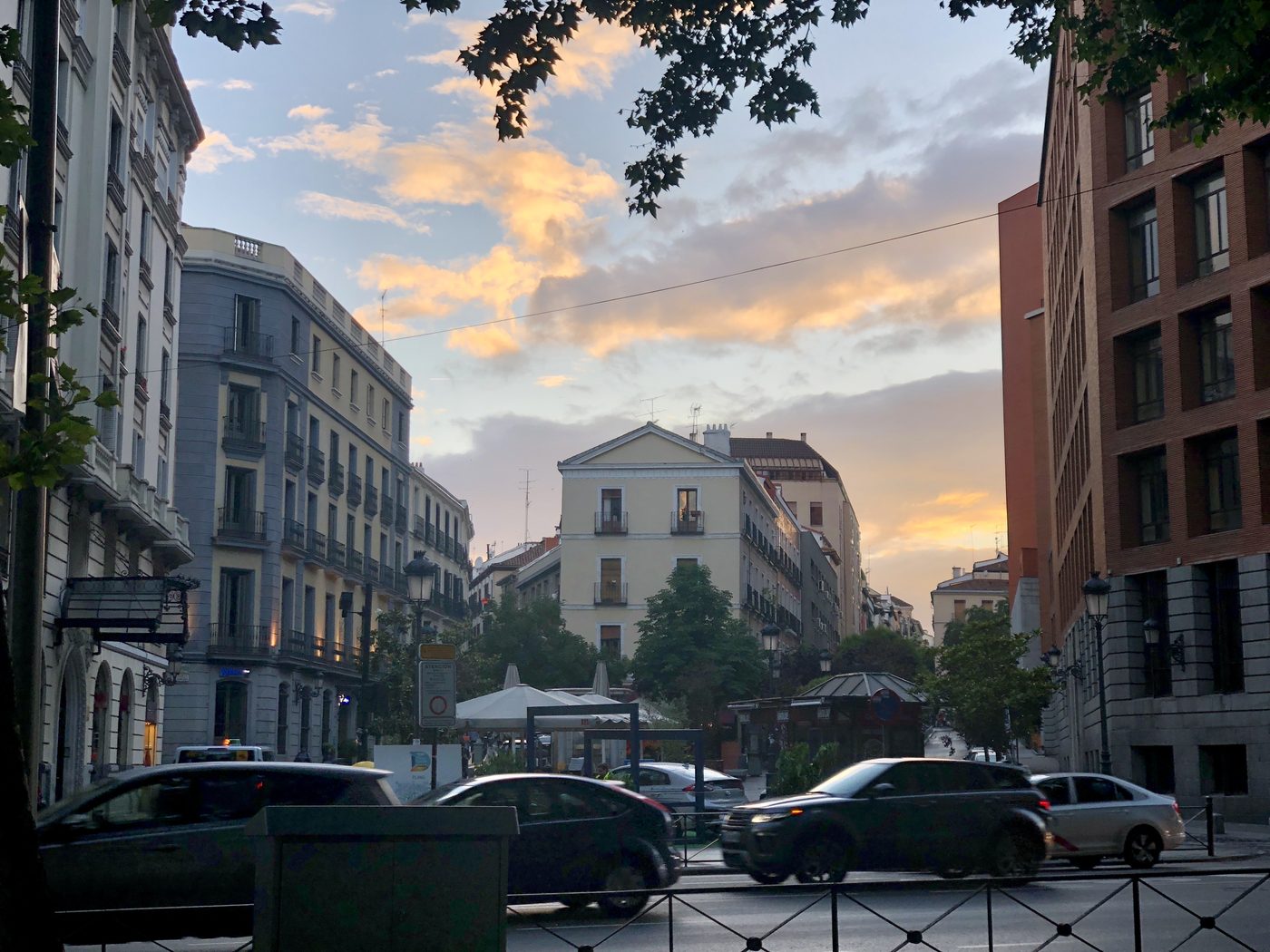
Instead of only writing about experiences, document them spatially. Using Google Maps or similar tools, build an evolving map of your host city. Layer in photographs, audio recordings, transit routes, and notes about neighborhoods you avoid or prefer. Over weeks, a pattern emerges: your anxiety zone shrinks, your familiarity grows, and your understanding of local inequality, gentrification, or migration becomes more concrete.
This technique draws on geographic-imagination pedagogy used in some of the strongest study-abroad curricula. Students who map their experience do not just remember it better; they learn to read cities as texts—a skill transferable to urban studies, planning, sociology, and international business.
4. Peer Discussion and Collaborative Reflection
Do not process everything alone. Schedule regular check-ins with a small group of peers from your program. Structured discussion questions work better than “How was your day?” Try:
- What is one cultural norm you noticed this week that you did not expect?
- When did you feel most like an outsider, and what did that teach you?
- How did your home-culture assumptions show up in a recent interaction?
When students compare interpretations, they discover that their reactions are not inevitable or universal. That realization—that multiple valid readings of the same event coexist—is a core outcome of intercultural education.
5. Creative Expression
Not all reflection needs to be prose. Photographic essays, audio diaries, short videos, and sketch journals can capture dimensions of experience that linear writing misses. A photograph of a street scene with 200 words of annotation can carry more analytical weight than a generic paragraph about “an interesting day.”
If your program offers a final showcase or portfolio review, treat it as a real audience for real work. The practice of curating and presenting your learning is itself a professional skill.
6. Field Notes for Professional Contexts
If your program includes an internship, research placement, or service-learning component, keep structured field notes in a separate professional document. Record tasks, communication patterns, conflict resolution moments, and examples of teamwork. Six months later, when you are in a job interview, you will be grateful for the specificity.
Example entry format:
7. Post-Return Integration Projects
The students who retain the most from study abroad are those who build a home-campus artifact within the first semester back. Options include:
- A capstone paper incorporating field data or interviews
- A presentation to campus peers or a student organization
- A digital portfolio linking overseas projects to major learning outcomes
- A mentorship conversation with a faculty member who can endorse your growth
You are not just preserving memories. You are creating evidence of competencies that future employers or graduate programs can evaluate.
Before-You-Go Reflection Checklist
Real Student Scenario
Emma arrived in Madrid expecting to improve her Spanish and check European cities off her list. She reflected weekly, but her prompts were vague until her program director suggested a spatial mapping exercise. Over the semester, Emma’s map evolved from tourist landmarks to neighborhood-level observations about housing costs, immigrant communities, and public transit access. When she returned, she incorporated the map into a sociology paper on urban inequality. Her professor later used it as evidence for a grant proposal. Emma tells students now: “I thought I was there to learn Spanish. I ended up learning how cities work.”
First-trip planning answers
Why does reflection matter after study abroad?
Because unreflected experience does not transfer. You can spend five months abroad and be unable to answer “tell me about a time you dealt with ambiguity” six months later — not because it did not happen, but because you never converted it into a form you could retrieve. Reflection is what turns a period of your life into evidence you can use.
What should you write about while studying abroad?
Not what you did — your photos already record that. Write what surprised you, what you got wrong, what you could not do at first and can now, and what you changed your mind about. Those four categories produce almost everything useful later, whether for an interview, a scholarship essay or your own memory.
How often should you journal abroad?
A short entry two or three times a week beats a long one on Sundays, because you will miss Sundays. Five minutes and three lines is a sustainable habit; an hour is not. Add one longer weekly entry if you can, since that is where patterns show up that daily entries miss.
How do you use reflection in a job interview?
Mine your journal for two or three complete stories with a situation, a specific problem, an action you took and a result. Rehearse them to about two minutes each. This is the single highest-return use of a study abroad journal, and it is why our guide on what employers actually care about starts with evidence rather than enthusiasm.
What about reverse culture shock?
Reflection helps most precisely when you get home, which is when the experience is most at risk of being flattened into a few anecdotes. Keep the journal going for a month after you land — it is also the period when reverse culture shock peaks, and having somewhere to put that is genuinely useful.
The Study Abroad Starter Kit
18 pages of fill-in structure rather than blank pages: application trackers, budget sheets, motivation-letter and recommendation-request templates, and the 12–18 month timeline that decides whether you get to go at all.
Get the Starter Kit$15 · instant PDFThe reflection kit
Reflection fails for mechanical reasons — no notebook to hand, no prompt to answer, nothing to make it a habit. These fix the mechanics.
- A guided journal with prompts — A blank page defeats most people; a prompt does not.
- A pocket notebook — The good observations happen on a bus, not at a desk.
- A hardcover A5 notebook — For the weekly longer entry that becomes your interview material.
- An instant camera — Printed photos get looked at again; camera-roll photos do not.
- A scrapbook or photo album — Tickets, receipts and menus are better memory triggers than photographs.
- A book on reflective practice — If you want a structure rather than a habit.
Joriu is a member of the Amazon Associates programme. The links above are affiliate links — if you buy through one, we earn a small commission at no extra cost to you. We only list gear we would pack ourselves, and a commission never buys a place on this list.
Joriu has no ads, no paywall and no sponsored placements — the guides are free because a few readers chip in. If this saved you an hour of research, you can buy us a coffee.
Want a ready-made reflection system?
The Joriu Study Abroad Starter Kit includes fill-in templates you can adapt for weekly reflection, plus the application and budget trackers that turn your semester into a documented record.
FAQ
How much time should reflection take? Fifteen to thirty minutes per week is enough if the entries are specific and purposeful.
Do I need to be a good writer? No. Reflection is thinking on paper (or in audio). Clarity matters more than style.
What if I fall behind on reflection? Progressive overload is common. Try one sentence when you are busy. The habit matters more than length.
Can I combine reflection with social media? Yes, if you use it intentionally. A caption that explains what you observed is more durable than a photo alone.
Do programs grade reflection? Some do; some do not. Treat it as self-assessment regardless of whether it affects your grade.
Bottom Line
Reflection is the tool that turns expensive travel into durable education. Use multiple tools, schedule the practice, and treat your output as evidence of skills you will cite for years. The students who master this habit do not just “have a great experience abroad.” They come home with a portfolio they can show employers.
Get the free Move-Abroad Checklist
The full 12-month runway on one printable PDF — plus occasional visa and cost updates.
 Done — download your checklist (PDF).
By subscribing you agree to our privacy policy.
Reflection practices here are drawn from published intercultural-education research, not a specific program's curriculum — check whether your program already requires structured reflection before adding your own system on top.